
Unlock Aid 2025 Wrapped
The year global development reached a turning point. Now we build what comes next.
Dear Unlock Aid community,
This year marked a turning point for the global development ecosystem. Long-standing structures shifted, familiar pathways narrowed, and many organizations were forced to make difficult decisions under significant constraints, with real impacts for the communities they serve. For many, it was an unsettling year. But it was also a clarifying one.
Since our founding in late 2021, we’ve spent the past four years proposing new models for U.S. investments in global development.
Our focus has always been to ensure that the world’s leading global development institutions are set up to build a “Beyond Aid” future alongside a new generation of organizations already solving real problems. We’ve advanced approaches that treat countries as true partners in shaping their own futures, pay for outcomes, prioritize long-term financial sustainability, leverage innovation, and bring proven, cost-effective solutions to scale for the world’s hardest challenges.
In 2025, the question stopped being whether the system would change. It became who would be ready to lead what comes next.
As we close out this year and look to the next, we’re sharing Unlock Aid Wrapped, a curated collection of work from 2025 that captures this inflection point and the momentum we’re building toward the future.
To Progress,
Team Unlock Aid
Responding to the Moment
Launching a New Standard for U.S. Global Engagement
In early 2025, we published Aid Reimagined: The New American Foreign Partnership Standard – a blueprint for how donors and especially the U.S. government should work differently, building on our work over the past four years. We used this framework to launch an updated policy agenda for the new administration.
How We Built a $2 Million Bridge Fund
After launching the Foreign Aid Bridge Fund to provide immediate assistance to high-impact, frontline organizations affected by cuts in early 2025, we wrote this behind-the-scenes look at what it took to launch a rapid-response, flexible fund within just a few weeks while larger emergency funds were still taking shape.
Releasing $14 Billion: Our Campaign to Unlock Lifesaving Funds
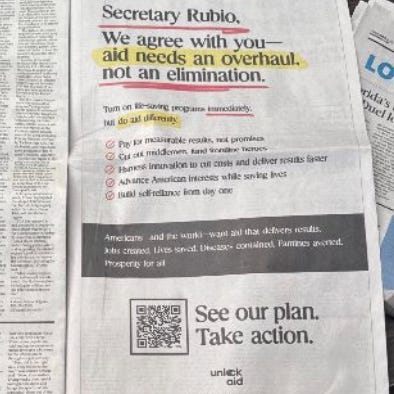
We launched a campaign for the U.S. government to release $14B in already-approved health funds, but to deploy them differently than before – by paying for results to locally-endorsed, frontline solutions. We ran targeted ads across 14 key states, placed a full-page ad in the Miami Herald, and mobilized thousands of phone calls to lawmakers. We also published an illustrative RFP showing how the State Department could stand up a $1B Pay-for-Results Health Fund to rapidly deploy funding.
It’s Time to Move Beyond Aid: Washington, D.C. Recap
On the 100th day of the new administration, we brought dozens of coalition partners to Capitol Hill for a day of action with the African Diaspora Network. Our shared goal: reimagine the future of U.S. global engagement – Beyond Aid. One lawmaker told us our proposals were a “breath of fresh air.”
Shaping What Comes Next
Reimagining America’s Global Development Approach
We launched ReimagineAid.org – an effort that brought together more than 20 experts and 600 participants to rank-vote 30+ proposals to modernize U.S. international investing. We used these results to update our broader policy agenda to influence proposals at the State Department and on Capitol Hill.
The Builders Report: What We Learned
We surveyed 50+ social innovators, who told us they had largely weathered big shifts in development because they had built diversified revenue models. The report captures recommendations to scale proven approaches with a new generation of innovative partners.
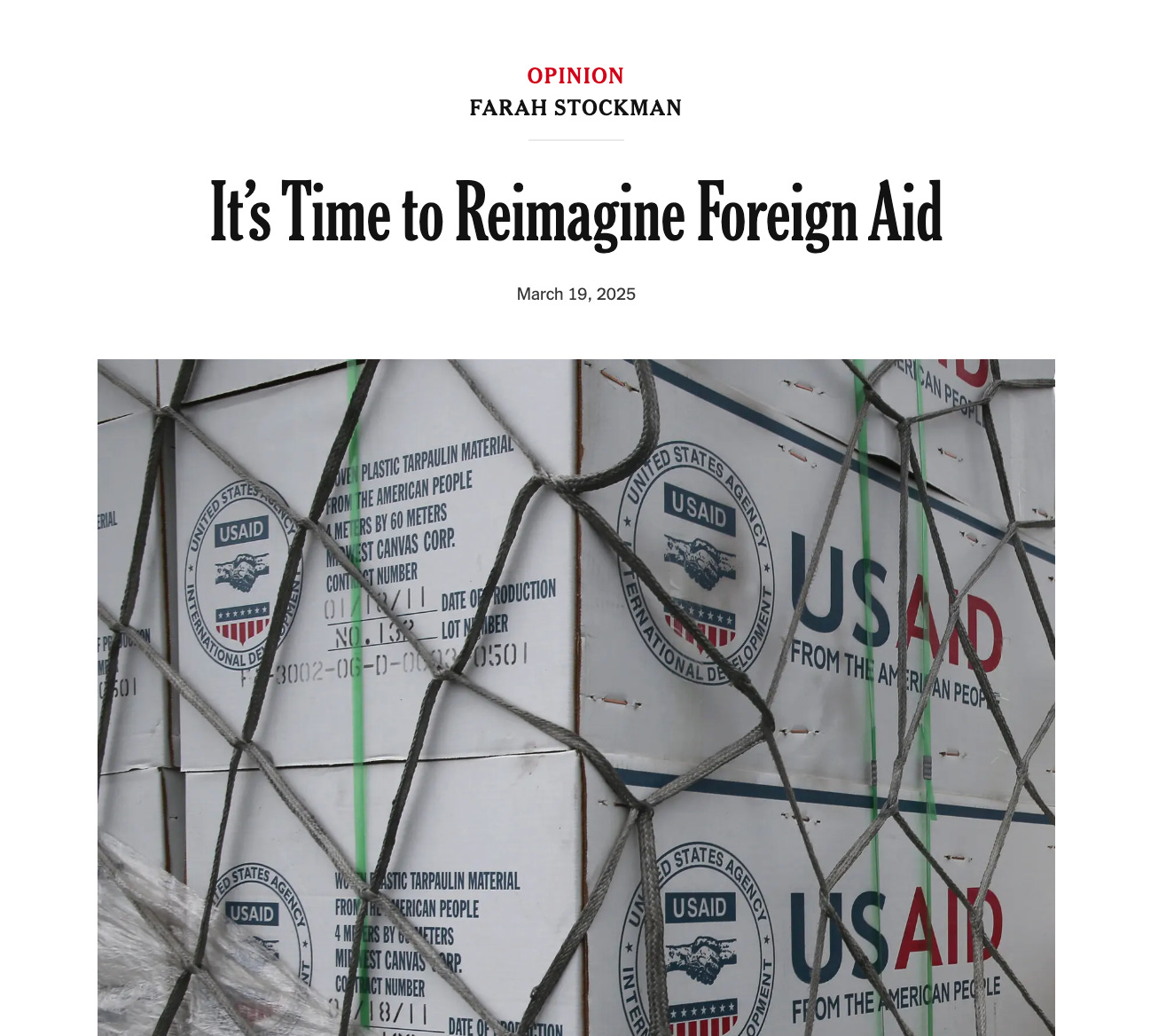
NYT Opinion: It’s Time to Reimagine Aid
A New York Times opinion piece argued that foreign aid as it existed is over and calls for more cost-effective, financially sustainable, and locally-driven models, citing Unlock Aid’s work.
Other media, including an op-ed in Fox News by our policy director, also proposed new approaches. The Global Prosperity Institute wrote, “Unlock Aid has done more thinking than most about Day Zero for the aid world,” drawing parallels between our work and what U.S. policy groups now call the “abundance agenda.” In outlets like the Washington Post and in our own media, we corrected the record when influencers mischaracterized data about U.S. foreign aid, such as the share of funding that reaches local partners.
New System Starts to Take Shape
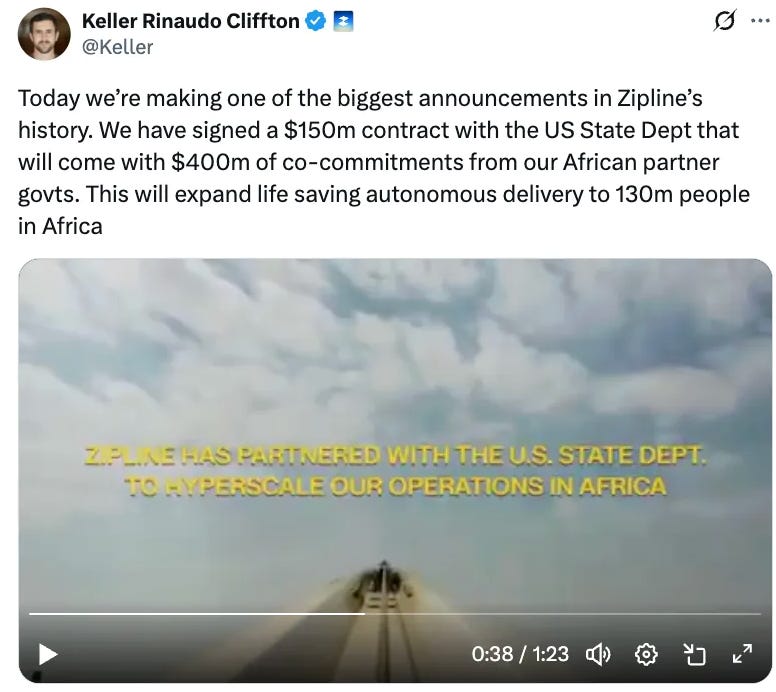
The State Department’s $150M Move: What It Means
The State Department announced its new approach to U.S. global health, including areas we’ve long called for: country-to-country agreements, leveraging innovation, and prioritizing financial sustainability. One of the State Department’s first major announcements was a $150 million pay-for-results partnership with Zipline to modernize health supply chains across five African countries, serving 130 million people.
Introducing the Solutions Index: Health Supply Chain Edition
As the State Department and other donors look for new partners, we launched the Solutions Index to give funders visibility into organizations already delivering results at scale. Our inaugural edition highlighted 33 leading innovators in global health supply chains, selected by an expert panel out of more than 130 applications. Future editions will cover food security, water and sanitation, education, and additional health verticals.
Looking Ahead
The old system isn’t coming back. But what replaces it is still being built. In 2026, we’ll continue working to ensure that what comes next is built on the principles we’ve been advancing from the start: local ownership and country sovereignty, financial sustainability, innovation, and paying for results. Thank you for being part of this work.
Happy New Year from everyone at Unlock Aid.